About the Museum
Basilica Cistern is one of Istanbul’s most mysterious and evocative landmarks, hidden beneath the streets of the historic peninsula. Constructed in the 6th century during the reign of Byzantine Emperor Justinian I, this vast underground reservoir once supplied water to the Great Palace and surrounding buildings, ensuring the survival of the city during times of siege and drought.
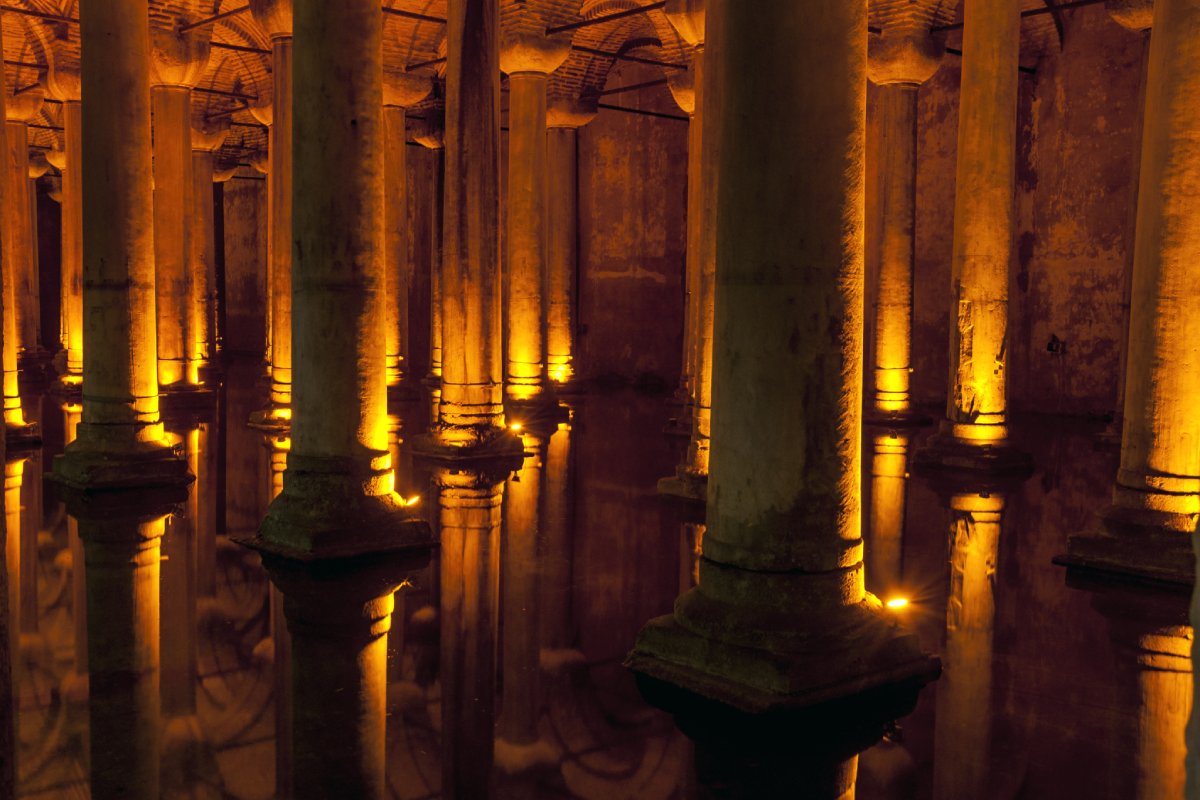
Unlike surface monuments, the cistern reveals itself gradually. Visitors descend into a dimly lit space supported by hundreds of marble columns, many of which were reused from earlier Roman structures. The rhythmic repetition of columns, reflected in the shallow water below, creates a powerful sense of symmetry, calm and timelessness.
The structure measures approximately 138 meters by 65 meters and is supported by 336 columns arranged in neat rows. Most columns feature Corinthian or Ionic capitals, showcasing the architectural diversity of the late Roman and early Byzantine periods. This reuse of materials highlights both the practicality and artistic awareness of Byzantine builders.
One of the most famous features of the Basilica Cistern is the pair of Medusa heads placed at the base of two columns in the northwest corner. Positioned sideways and upside down, these sculpted heads likely originated from a much earlier Roman monument. Their unusual placement has inspired centuries of legends, interpretations and myths, adding an element of mystery to the site.
Water once entered the cistern through aqueducts connected to reservoirs outside the city. The interior walls were carefully waterproofed with special mortar to prevent leakage, demonstrating advanced engineering knowledge for its time. The cistern’s massive capacity allowed Constantinople to function smoothly even under extreme conditions.
After the Ottoman conquest of Istanbul, the cistern continued to exist beneath the city, though its function gradually faded from daily life. For centuries, it remained largely hidden, occasionally rediscovered by residents who accessed water through wells beneath their homes. This long period of obscurity preserved the structure and contributed to its sense of quiet isolation.
Today, Basilica Cistern functions as a museum space where history, architecture and atmosphere come together. Subtle lighting emphasizes the columns and arches, while wooden walkways guide visitors across the reflective surface of the water. The sound of dripping water and soft echoes enhances the immersive experience.
Rather than telling its story through objects or displays, Basilica Cistern speaks through space, shadow and silence. It stands as a reminder of the invisible infrastructure that once sustained one of the world’s greatest cities, offering a unique perspective on Byzantine engineering and Istanbul’s layered urban history.
Highlights
- Underground Reservoir: Built in the 6th century to supply water to Byzantine Constantinople.
- 336 Marble Columns: Arranged in symmetrical rows creating a striking visual rhythm.
- Medusa Heads: Two sculptural bases placed sideways and upside down, surrounded by legend.
- Byzantine Engineering: Advanced waterproofing and aqueduct-fed water system.
- Reused Roman Materials: Columns and capitals sourced from earlier ancient structures.
- Atmospheric Lighting: Soft illumination enhancing reflections and architectural depth.
- Wooden Walkways: Elevated paths allowing visitors to explore above the water.
- Corinthian and Ionic Capitals: Displaying architectural diversity within the cistern.
- Echoing Acoustics: Subtle sounds that add to the immersive underground experience.
- Hidden Urban Heritage: A monument concealed beneath the city for centuries.
Frequently Asked Questions
It was constructed to store and supply water to the Great Palace and surrounding buildings during the Byzantine era.
The cistern was built in the 6th century during the reign of Emperor Justinian I.
A total of 336 marble columns support the ceiling of the structure.
Many columns were reused from earlier Roman buildings, reflecting a practice known as spolia.
They are sculpted stone heads placed as column bases, likely originating from an earlier Roman monument.
Their unusual placement may have been practical, symbolic, or intended to neutralize mythological power.
Water flowed through aqueducts connected to reservoirs located outside the city walls.
It remained largely unused but was occasionally accessed by residents through wells beneath their homes.
Its underground location, reflective atmosphere and monumental scale set it apart from surface landmarks.
Visitors experience a quiet, immersive space defined by light, shadow, reflections and ancient architecture.