About the Museum
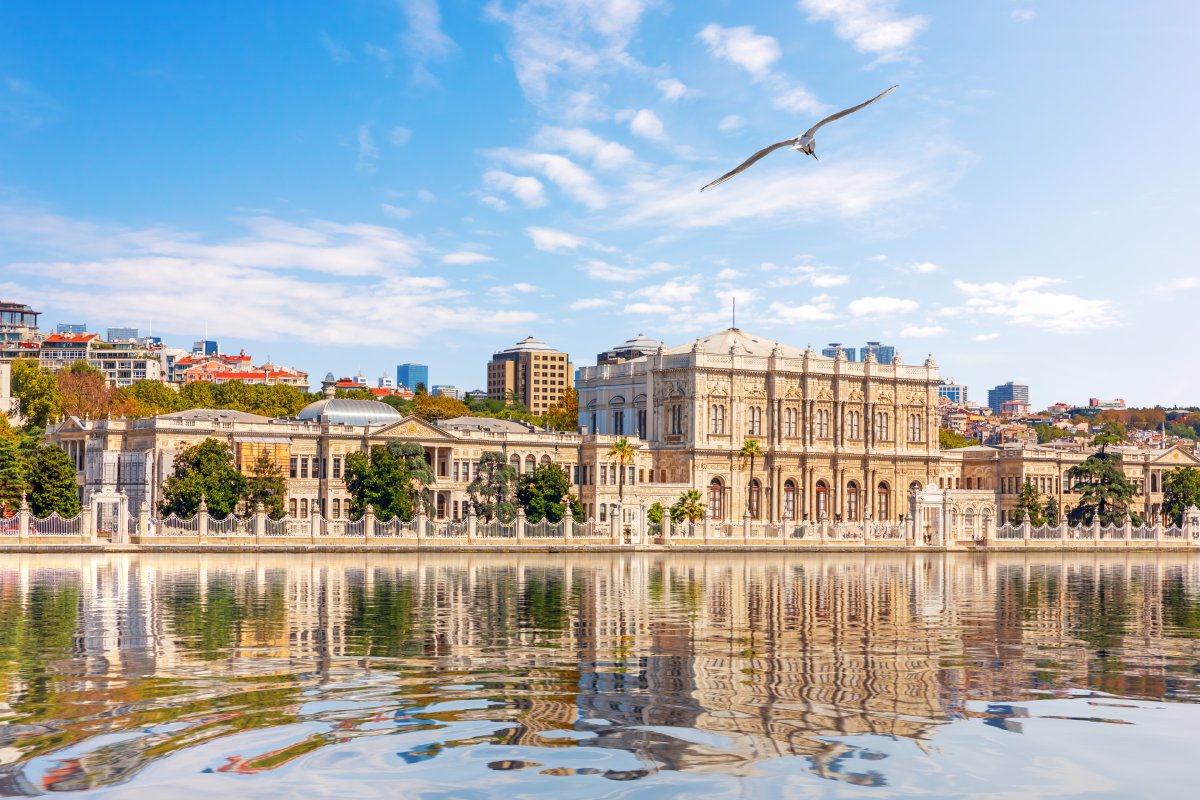
Dolmabahce Palace stands as one of Istanbul’s most magnificent imperial residences, marking a dramatic shift in Ottoman architecture and lifestyle during the 19th century. Built along the shores of the Bosphorus, the palace reflects the empire’s desire to modernize and engage more closely with Europe, while still preserving its imperial identity.
Commissioned by Sultan Abdülmecid I and completed in 1856, Dolmabahce Palace replaced the traditional courtyard-based palace model with a monumental, symmetrical structure inspired by European royal residences. Its design incorporates Baroque, Rococo and Neoclassical elements, creating a striking contrast to earlier Ottoman palaces such as Topkapi.
The palace complex consists of three main sections: the Mabeyn-i Hümayun (administrative halls), the Muayede Hall (Ceremonial Hall), and the Harem. Each section reflects a distinct function within palace life, from governance and diplomacy to ceremony and private residence.
The Ceremonial Hall is the most impressive space within the palace. With its soaring dome and monumental proportions, it hosted state receptions, religious celebrations and diplomatic events. The hall is illuminated by one of the largest crystal chandeliers in the world, symbolizing the wealth and prestige of the late Ottoman court.
Dolmabahce Palace is renowned for its lavish interiors, featuring gilded ceilings, silk carpets, crystal staircases and richly decorated salons. European furniture, clocks and artworks were imported to furnish the palace, reflecting the cosmopolitan tastes of the Ottoman elite during this period.
The Harem section at Dolmabahce differs significantly from earlier palace harems. Rather than a secluded maze of courtyards, it was designed as a more integrated and refined residential area, emphasizing comfort, elegance and privacy for the imperial family.
Beyond its architectural and artistic value, Dolmabahce Palace holds deep historical significance as the place where Mustafa Kemal Atatürk, founder of the Republic of Turkey, spent his final days. This connection adds a powerful layer of modern national memory to the palace’s imperial past.
Facing directly onto the Bosphorus, the palace’s gardens, gates and waterfront façade offer a majestic setting that unites architecture with landscape. Today, Dolmabahce Palace functions as a museum, allowing visitors to experience the final era of Ottoman imperial life through its monumental spaces and refined details.
Dolmabahce Palace stands not only as a symbol of luxury, but also as a reflection of transformation — where tradition met modernization at the twilight of an empire.
Highlights
- Bosphorus Waterfront Location: A monumental palace directly facing the strait.
- European Architectural Styles: Baroque, Rococo and Neoclassical influences.
- Ceremonial Hall (Muayede Hall): Used for state events and imperial celebrations.
- Crystal Chandelier: One of the largest crystal chandeliers in the world.
- Lavish Interiors: Gilded ceilings, silk carpets and ornate decoration.
- Imperial Administrative Halls: Spaces used for governance and diplomacy.
- Refined Harem Section: Designed as an elegant residential area for the imperial family.
- Imported European Furnishings: Reflecting 19th-century modernization.
- Atatürk’s Final Residence: Place where Mustafa Kemal Atatürk spent his last days.
- Palace Gardens and Gates: Harmonizing architecture with the Bosphorus landscape.
Frequently Asked Questions
It was built to reflect the Ottoman Empire’s modernization efforts and closer engagement with European royal traditions.
The palace was commissioned by Sultan Abdülmecid I in the 19th century.
Unlike traditional courtyard-based palaces, it follows a symmetrical, European-inspired layout.
It hosted official receptions, religious celebrations and major state ceremonies.
Much of the interior decoration, including furniture and artworks, dates back to the palace’s imperial period.
Baroque, Rococo and Neoclassical styles dominate the palace’s design.
Dolmabahce’s Harem was designed as a more integrated and elegant living space rather than a secluded complex.
It is the place where Mustafa Kemal Atatürk spent his final days.
Crystal, gold leaf, marble and silk are prominent throughout the interiors.
Its direct position on the Bosphorus creates a unique connection between imperial architecture and the waterfront.